Updated 30 August 2026: rechecked current Fresha loyalty and reporting documentation and added current Zenoti and Boulevard retention benchmarks.
How to choose a salon loyalty app in the UAE
There is no single best salon loyalty app for the UAE. The right tool depends entirely on the job you need done: whether you want to log loyalty points, see who's leaving and bring them back, or both. A loyalty app with fifty features you'll never configure is worse than a focused tool that closes your actual gap - which is why ranking by feature count, the way most listicles do, is the wrong lens.
So this guide is organised by what job you're hiring the tool to do, not by a leaderboard. We include LoyalsClub - which we build, so treat our entry with appropriate scepticism. We've checked competitor descriptions against current documentation because features and availability change. The underlying conditions that shape what works in this market are covered in our client retention strategies guide for Dubai salons.
Zenoti's 2025 benchmark puts salon rebooking within 24 hours at 10% for the median business and 30% for top earners. That is not a UAE benchmark, but it gives this comparison a useful test: does the tool only issue value, or can it also show you the return behaviour you are trying to improve?
First-time clients who returned for a second visit at average salons versus top-performing salons in Boulevard's 11-million-appointment analysis.
Boulevard, 2023. US platform data, not a UAE benchmark.
Category 1 - Loyalty built into your booking platform
If you already run a booking and POS platform, it may include a loyalty add-on. Fresha is the most common in the UAE salon market, and tools like Boulevard, Phorest, and Vagaro serve similar roles internationally.
Best for: owners who want loyalty and retention reporting inside the system they already use, with nothing new for staff to scan.
The trade-off: built-in loyalty is usually single-brand and attached to the booking platform's client experience. Fresha's current documentation shows points, tiers and referrals, while its client insights report can filter rebooked clients and show visit intervals. Those are real retention capabilities. The decision is whether you want them inside the booking platform or want a separate, business-branded layer with private in-app feedback and a shared app across participating businesses. We wrote a fuller honest review of Fresha's loyalty program and a side-by-side comparison. If you're tempted to switch platforms entirely, read Fresha alternatives in the UAE first.
Category 2 - Standalone stamp / punch-card apps
A range of generic "digital loyalty card" apps offer a points or stamp mechanic you can bolt onto any business.
Best for: very small businesses that want a simple digital stamp card and nothing more.
The trade-off: these are usually built for any business type, so they're shallow on the things specific to repeat-service businesses - client-level visit tracking, win-back, and feedback that protects your public rating. They give the client a card; they rarely give you insight.
Category 3 - Apple/Google Wallet pass platforms
This is the category that grew fastest in the UAE, and the one most likely to be pitched to you next. Instead of an app, the client gets a pass that drops straight into Apple Wallet or Google Wallet. Staff scan it from a phone, and the business can send push notifications to the pass.
Best for: cafés, quick-service spots, and any business where the whole job is "stamp a card" and the sign-up has to survive a queue.
What it wins: the sign-up. No download, one tap, done. That's genuinely smoother than what an app asks for, and it's worth about ten seconds of your client's day.
What it can't do: anything that happens after those ten seconds.
Which matters, because nobody loses a client at sign-up. She signs up happily. You lose her over the following six weeks, and that is precisely the stretch a pass has no surface for.
Start with the distinction that matters. An Apple store-card pass can include images, but those images are bound to a fixed pass layout. The pass does not become a browsable, interactive reward catalogue where a client can compare several changing rewards and their point costs. It works well for one simple balance or offer; it is a different surface from an app designed for exploring what to earn next.
That's the whole game, and it is one reason Sephora gives members a full app experience instead of reducing loyalty to a pass. A pass can hold points, but a richer surface lets the customer look at the thing she's earning. Put a photo on it, value it in points, show it to someone who's 60 short, and you've created a reason to book. A number cannot do that.
The list of things with no home on a card keeps going. A private "how was it?" after the visit, so an unhappy client tells you instead of telling Google. A brand page carrying your photos, your Instagram, and directions that open in Maps. A referral where your regular brings a friend and both of them earn on the friend's first visit. A joining bonus already sitting in her balance, which is the single most useful thing you can hand a first-timer, because it converts the visit that decides everything: the second one.
A wallet pass records loyalty. It doesn't build it.
Messaging is thin too. Google allows three push-triggering messages in any 24 hours, links must relate to the pass, and notifications have to be switched on. And the no-download win applies to the first pass. Give every salon, café and clinic in the neighbourhood its own, and the wallet becomes a barcode graveyard nobody opens.
The pitch you'll hear is "app fatigue is real, nobody wants your app." For a single-business app that's fair, and worth taking seriously. Just notice what it's actually an argument against: a separate app per business, which is the exact thing a shared one is built to avoid. Full comparison, including where the pass genuinely wins, in loyalty app vs Apple/Google Wallet pass.
Category 4 - Dedicated retention layers (this is what LoyalsClub is)
A newer category sits alongside your booking system and focuses specifically on retention: who returns, who drifts, and what to do about it.
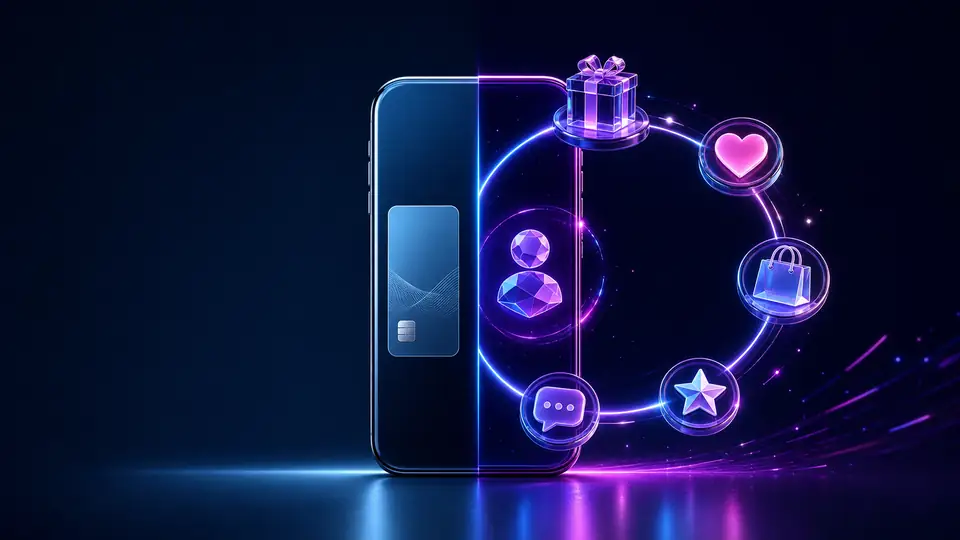
LoyalsClub is built for this. It runs alongside Fresha or any POS, using a shared customer app and a staff QR scanner. What it adds beyond points:
- A browsable reward catalogue - each reward is a card with a photo, the points it costs, and how long it's valid, browsable before the client has earned enough. A wallet pass can show layout-bound images, but it does not provide the same interactive catalogue.
- A joining bonus that targets the second visit - switch it on and a first-timer leaves with points already banked. The gap you're trying to close is first visit to second; this aims straight at it.
- Referral built in - invite a client directly and they get a welcome bonus on joining, or let a regular refer a friend, where both earn on the friend's first transaction. Acquisition attached to retention rather than bolted on.
- AI suggestions from your own numbers - the dashboard reads your data and proposes a specific action ("returning visits dropped, add a rebook-within-7-days bonus"), which you apply in one click.
- Client-level visit tracking - see who's loyal, who's lapsed, and who's worth winning back.
- Private feedback after each visit - only you see it, so an unhappy client tells you directly instead of posting a public review.
- Win-back - reach lapsed clients from a real list with one message or a targeted offer.
- Multi-location reporting - revenue, visits, and retention by branch.
- One shared app clients may already use for other businesses, so install friction is low.
Best for: owners whose real problem is first-visit-to-second-visit drop-off, who want to keep their booking system and add a retention layer on top.
The trade-off (and our bias): if all you want is a points card, a dedicated retention tool is more than you need. Use the smaller tool and keep the extra process off your front desk.
The questions that matter more than the feature list
Whatever category you lean toward, judge the shortlist on these:
- Does it show me who's leaving? A points balance the client sees is not the same as a lapsed-client list you see.
- Does it run alongside my booking system, or demand I replace it? Replacing a working booking platform to fix loyalty is usually a disproportionate move.
- Does it protect my public rating? A private feedback channel catches unhappy clients before they reach Google.
- Can I act, not just observe? Insight without a way to message or reward lapsed clients is half a tool.
- Does the commercial model reward the same outcome you want? Acquisition fees and retention tooling solve different jobs. Compare the model only after you know which job is missing - and remember that keeping an existing client typically costs far less than winning a new one.
If public reputation is part of the decision, use the Dubai salon review-count and recency guide rather than relying on a supposed machine threshold. If assistants recommend competitors despite strong listings, test the six causes in the AI-assistant visibility diagnostic.
A sensible way to decide
Start with your numbers, not the tools. Estimate what non-returning clients cost you each year - the figure usually makes the priority obvious, and research by Bain's Fred Reichheld found that lifting retention just 5% can raise profits 25-95%. Then read why clients don't come back so you're solving the real breakdown rather than buying a feature.
If the leak is small and you just want a points card, a built-in add-on is fine. If the leak is significant and you want to see and reverse it, that's the job a dedicated retention layer is built for.
Disclosure: LoyalsClub is our product, so this guide is not neutral. We have described each category fairly and linked current competitor documentation where the distinction matters. Features and availability change, so check each vendor's documentation before deciding.