A patient finishes her third session, pays a bill that would cover a month of someone's coffee habit, and your receptionist hands her a card with three stamps on it. Seven more and she gets a freebie. At her visit rhythm, that's sometime in two years.
That's the stamp-card problem in one scene. The question clinic owners actually ask - stamps or points? - has a short answer and a useful one. The short answer is "points, if you must choose." The useful answer is that for an aesthetic clinic, the reward mechanic is the least important part of the machine.
Why stamp cards break on a clinic's rhythm
Stamp cards were designed for coffee: a small, frequent, identical purchase. Every mechanic inside them assumes that shape. The card fills fast enough to feel like progress. The free tenth item costs the business very little. A lapsed customer is visible within a fortnight because the rhythm is weekly.
An aesthetic clinic is the exact inverse on every axis. Visits come every eight to twelve weeks, often as part of a treatment plan. The ticket is ten to fifty times a café's. And a patient who quietly stops coming looks, for months, exactly like a patient who is simply between sessions.
Run the mechanic against that shape and it fails twice:
- Emotionally. Two stamps after five months is not momentum, it's a reminder of how far away the reward is. The card demotivates the exact behaviour it was meant to encourage.
- Economically. "Collect ten, get one free" on a high-value treatment either gives away serious revenue or gets watered down into a reward nobody wants. There's no good setting on that dial.
Points fit better - if you size them to the ticket
Points survive the transplant because they scale. A patient who spends more earns more, so a big visit produces a visibly big thank-you, and the program stays fair across a menu that runs from quick consultations to full treatment courses.
Three sizing rules keep points honest in a clinic:
Think in percent of spend, not points per visit. Clinic tickets vary too much for a flat rate to make sense. Most working programs return single digits as a percentage of the bill - enough to notice, too little to dent margin. You set the rate, watch real redemption for a quarter, then adjust.
Redeem into services and perks, not price cuts. Points toward a complimentary add-on, a skincare product, or part of the next session keep the reward inside your world at your internal cost. A points-shaped discount on the published price of a medical treatment is still a discount, with all its brand damage.
Let expiry be housekeeping, not the headline. A twelve-month horizon protects your books and gently favours a return visit. But if the main thing patients ever hear from you is "your points are about to vanish," the program reads as a trap. Lead with the reward.
The deeper comparison of the two mechanics - for any business, not just clinics - is in loyalty app vs digital punch card.
The premium-brand worry, answered by the premium brands
The objection we hear most from clinic owners: "Loyalty programs feel like something a discount chain does. We're a premium clinic."
The evidence points the other way. The best-known loyalty program in beauty is Sephora's Beauty Insider, and it leans on recognition - points, tiers, perks - rather than price cuts. Sephora understood that in beauty, being valued is the luxury, and that a program which says "we know you, we appreciate you" raises the brand rather than cheapening it.
What cheapens a premium clinic is discounting: the permanent 20%-off that teaches patients your list price is an opening bid. A reward that arrives after full-price payment, denominated in your own currency, does the opposite - the price stays whole and the gratitude is visible. The full margin argument is in loyalty vs discounts: the margin math.
The part that actually retains patients
Here's the uncomfortable truth about the stamps-versus-points debate: whichever you pick, the reward is not what saves a lapsing patient. Patients come back for trust and results. They fail to come back for quiet, structural reasons - no concrete nudge toward the second visit, no one noticing when they drift past their usual interval, a small disappointment that never reached you.
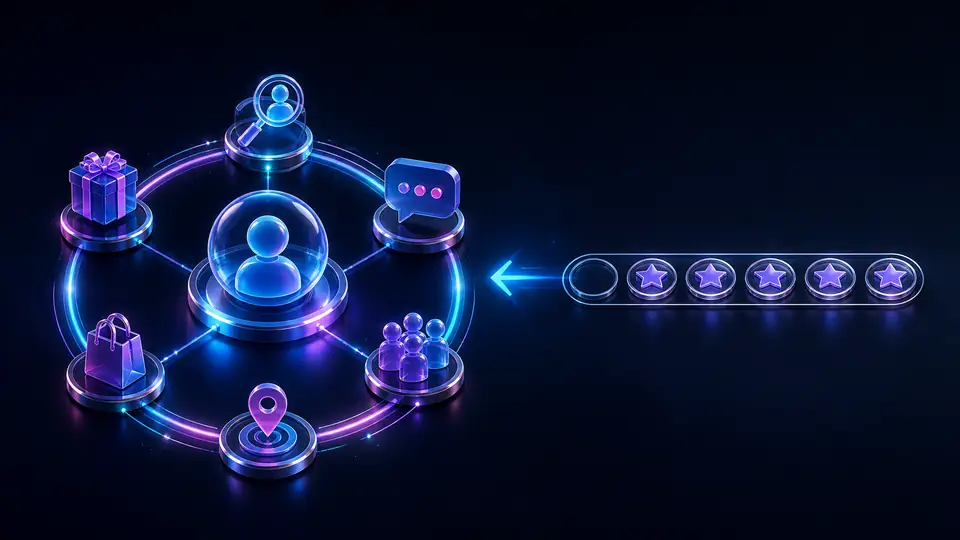
So the engine of a clinic retention system is not the reward. It's three kinds of visibility:
A reason to return, planted at the first visit. A first-visit bonus - points already sitting on the patient's profile - gives the second appointment a concrete pull. The second visit is where clinics lose the most people.
A list that shows who's drifting. Each patient's last visit shown as colour-coded days-ago, sortable, next to spend and visit count. A regular who now reads a red "97 days ago" rises to the top. On a clinic's long intervals this is the only reliable way to tell "between sessions" from "gone" - by the time intuition notices, it's months late.
Private feedback before public reviews. A patient uncertain about a result rarely complains at the desk. A private post-visit channel that goes only to you catches that signal while it's still a phone call, not a one-star review.
None of this is automated messaging, and that's deliberate. A clinic's follow-up has to sound like a clinic - a considered, personal message from you, not a marketing blast on a timer. The system's job is to show you exactly who's slipping; the deliberate human note is what actually lands. Who drifts and why, across service businesses, is covered in why clients don't come back.
Alongside your booking software, not instead of it
A practical worry with a practical answer: none of this touches your booking system. The calendar, reminders, and patient records stay exactly where they are. The loyalty layer ties to the payment moment instead - staff scan the patient's QR from their own phone, points accrue, the visit lands in the client list. No integration project, no migration, no hardware.
That separation is the point. Booking software answers "who is coming in today?" A retention layer answers the question booking software structurally can't: "who should have come in by now, and didn't?"
What patients see
The other half of "do patients actually use these?" is friction. A separate app per clinic is dead on arrival; nobody installs one app per business they visit. In a shared-app model the patient downloads one app, once, and every participating business lives in it - your clinic included, with a real page: your photos, your story, your locations with tap-to-navigate directions, your Instagram. Enrolment is one QR scan at the desk. After that, showing up in their wallet costs the patient nothing.
The honest bottom line
If someone sells you a stamp card for your clinic, they're selling you café furniture. If someone sells you points as the whole answer, they're selling you the wrapper without the engine. The mechanic worth paying for is the one that shows you, on a Tuesday morning, exactly which patients have drifted past their normal interval - while a personal message can still bring them back.
That's what LoyalsClub is built to do: points sized your way, a first-visit bonus, private feedback, and the lapsed-patient list at the centre - running alongside whatever already runs your calendar. See how it works or request a spot.